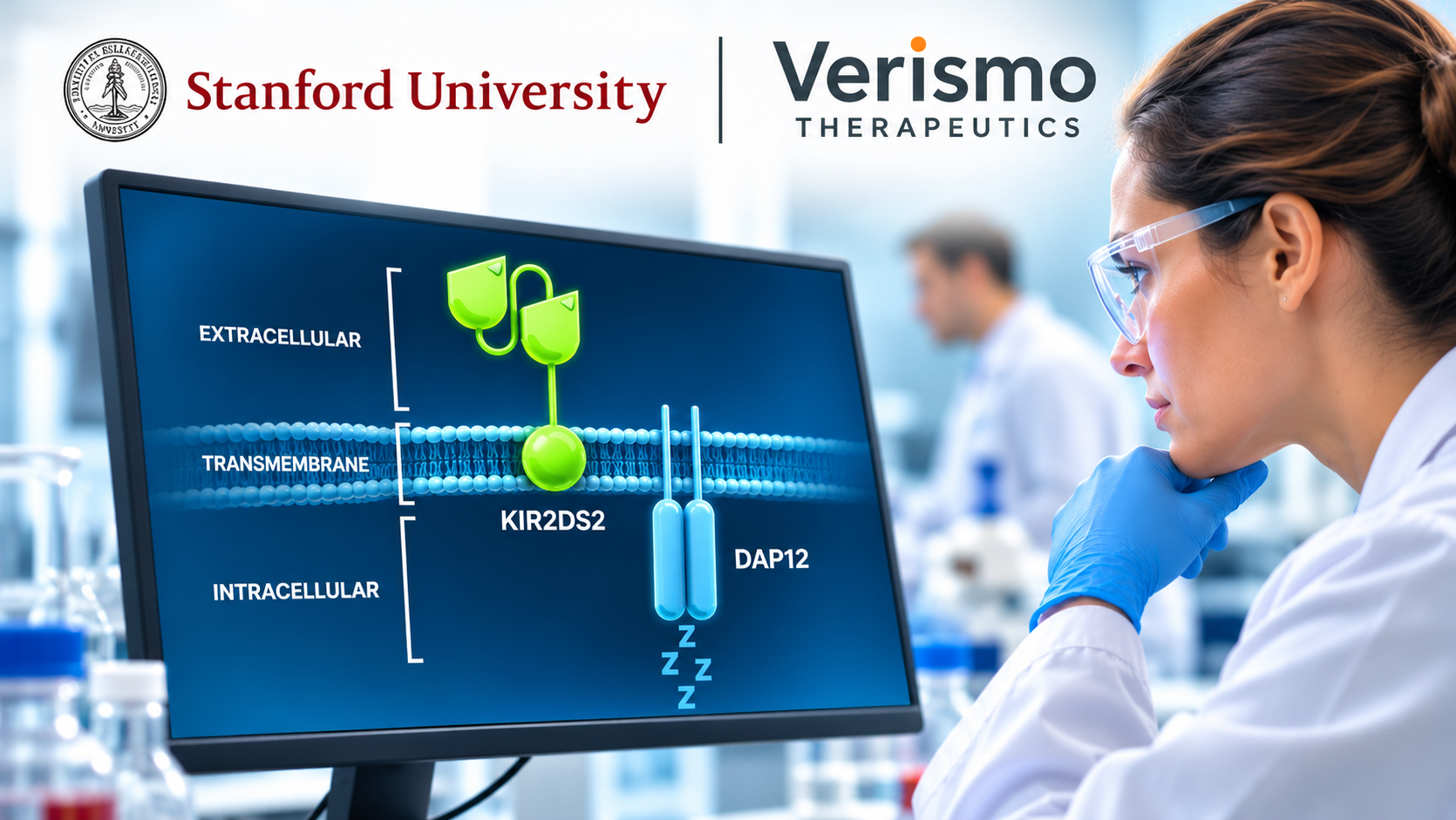


A new licensing agreement gives Verismo Therapeutics access to Stanford Medicine’s PACK-IT platform, which uses targeted lentiviral particles to deliver genetic material directly into T-cells. The company intends to combine this technology with its multi-chain KIR-CAR platform to develop next-generation CAR T-cell candidates that could simplify manufacturing and potentially improve treatment accessibility.
Key takeaways
- New technology licensing agreement: Verismo Therapeutics has licensed Stanford Medicine’s PACK-IT technology to extend its multi-chain KIR-CAR platform into in vivo T-cell engineering.
- A different approach to CAR T-cell manufacturing: PACK-IT uses engineered, T-cell-targeted lentiviral particles to deliver CAR genes directly into T cells, potentially reducing the need for conventional ex vivo manufacturing.
- Two clinical programs already underway: Verismo’s SynKIR™-110 and SynKIR™-310 candidates are being evaluated in separate Phase 1 clinical trials for solid tumors and B-cell malignancies, respectively.
- Early clinical observations: Initial findings reported by Verismo include dose-dependent activity signals with SynKIR-110 and a complete response in a patient with follicular lymphoma treated with SynKIR-310.
- Preclinical evidence supports further development: PACK-IT has demonstrated targeted CAR gene delivery and antitumor activity in preclinical models, but its application to KIR-CAR therapies has not yet entered clinical testing.
- Potential manufacturing advantages: The proposed in vivo approach could reduce manufacturing complexity, treatment delays, and costs, although these benefits remain to be established clinically.
Extending KIR-CAR technology beyond conventional manufacturing
Verismo Therapeutics, a clinical-stage cell therapy company and subsidiary of HLB Innovation, has entered into a licensing agreement with Stanford Medicine for the Programmable Antigen-Mediated Cellular Knock-in of T cell (PACK-IT) technology. The agreement provides Verismo with access to a technology developed in the laboratory of Crystal Mackall, MD, Ernest and Amelia Gallo Family Professor and professor of pediatrics and medicine at Stanford Medicine. Mackall is also the founding director of the Stanford Center for Cancer Cell Therapy.
Verismo intends to combine PACK-IT with its proprietary multi-chain killer immunoglobulin-like receptor (KIR)-based chimeric antigen receptor (CAR) T-cell platform to develop next-generation, in vivo CAR T-cell therapies. This development expands Verismo’s existing CAR T-cell strategy. The company is currently advancing two investigational candidates, SynKIR™-110 and SynKIR™-310, through conventional ex vivo manufacturing and Phase 1 clinical evaluation. The newly licensed technology is intended to provide another route for engineering therapeutic T cells, potentially allowing CAR genes to be delivered directly to a patient’s T cells inside the body.
Addressing the manufacturing challenges of CAR T-cell therapy
Conventional CAR T-cell therapy relies on an individualized manufacturing process. Clinicians collect T cells from a patient through leukapheresis, genetically modify them outside the body, expand them in a manufacturing facility, and subject them to quality testing before returning them to the patient. Although this approach has enabled the development and clinical use of several CAR T-cell therapies, manufacturing can be complex, resource-intensive, and time-consuming.
The process generally takes several weeks and requires specialized facilities, personnel, and manufacturing capacity. These requirements can contribute to treatment delays, limit the number of patients who can receive therapy, and increase overall treatment costs. In vivo CAR T-cell engineering takes a different approach. Rather than collecting and modifying T cells outside the body, this strategy aims to deliver the genetic instructions needed to produce CAR-expressing T cells directly inside the patient. For Verismo, the PACK-IT technology provides a potential means of extending its KIR-CAR platform into this emerging area of cell therapy development.
How the PACK-IT technology works
PACK-IT is an engineered lentiviral delivery platform designed to direct genetic material into specific cell populations. The technology uses modified lentiviral envelope proteins combined with T-cell-targeting antibodies or antibody-derived binding fragments. These components are designed to direct viral particles toward T cells by recognizing specific cell-surface receptors. Following cellular entry, the lentiviral particles deliver the genetic material encoding the desired CAR.
A key feature of PACK-IT is its potential to be used through two different manufacturing approaches. In vivo, the engineered lentiviral particles are administered directly to the patient, where they are intended to reprogram the patient’s own T cells. Ex vivo, the platform can be used to modify collected T cells through a substantially shortened manufacturing workflow, potentially avoiding conventional activation and expansion procedures. According to Stanford’s technology description, PACK-IT is designed to enable CAR T-cell engineering in hours rather than weeks. The platform is also being investigated for its ability to preserve T-cell functional characteristics by reducing the need for prolonged activation and expansion. These features are relevant to CAR T-cell development, where the functional state of engineered T cells can influence their ability to recognize and eliminate tumor cells.
Preclinical evidence supporting PACK-IT
The scientific basis for PACK-IT was presented at the 2025 American Association for Cancer Research (AACR) Annual Meeting. In abstract LB091, Burdsall and colleagues described the development of a T-cell-targeted lentiviral delivery system capable of generating CAR T cells through both accelerated ex vivo manufacturing and in vivo engineering. The investigators used modified vesicular stomatitis virus glycoprotein (VSV-G) to reduce the virus’s natural receptor-binding activity. A T-cell-targeting single-chain variable fragment was incorporated to direct lentiviral entry toward T cells.
In preclinical experiments, the investigators demonstrated that PACK-IT could generate CD19-directed CAR T cells without conventional T-cell purification and activation steps. The platform also supported an accelerated ex vivo manufacturing approach, including a four-hour process that eliminated the need for T-cell purification, activation, and expansion.
In a preclinical leukemia model using immunodeficient mice, intravenous administration of PACK-IT lentiviral particles generated CD19-directed CAR T cells in vivo. These cells demonstrated antitumor activity against Nalm-6 leukemia cells. The investigators also reported greater functional potency with PACK-IT-generated CAR T cells than with cells produced using conventional lentiviral engineering under the experimental conditions evaluated. These findings established preclinical proof of concept for targeted CAR gene delivery and provided the scientific rationale for further development of the technology. They do not, however, establish clinical safety or therapeutic efficacy in patients.
A different approach to CAR T-cell signaling
The PACK-IT agreement is particularly relevant because Verismo’s KIR-CAR platform differs structurally from conventional single-chain CAR T-cell designs. Most second-generation CAR T-cell receptors combine antigen recognition and intracellular signaling components within a single receptor. These receptors typically include an antigen-binding domain, a CD3ζ signaling domain, and a costimulatory component such as CD28 or 4-1BB.
Verismo’s KIR-CAR platform uses a multi-chain architecture derived from natural killer (NK) cell biology. The approach combines a killer immunoglobulin-like receptor (KIR) with DAP12, an intracellular signaling adaptor protein. Rather than incorporating all signaling components into a single receptor, the platform separates antigen recognition from T-cell activation. In the company’s platform, the KIR-derived receptor provides antigen recognition, while DAP12 supplies intracellular activation signaling.
This architecture is designed to reduce constitutive receptor activation, commonly referred to as tonic signaling, and limit premature T-cell exhaustion while maintaining tumor-directed activity. The distinction is important because T-cell exhaustion and loss of functional activity remain challenges in the development of cellular therapies, particularly when targeting solid tumors. Verismo aims to combine this multi-chain signaling approach with PACK-IT’s targeted gene-delivery capabilities.
Previous SynKIR-110 findings provide additional context.
The licensing agreement follows the company’s ongoing investigation of SynKIR-110, its mesothelin-directed KIR-CAR T-cell candidate. In an earlier Onco’Zine report, SynKIR™-110 Shows Improved Tumor Control and a Reduced Cytokine Release Profile, we examined preclinical findings presented at the Society for Immunotherapy of Cancer (SITC) 2026 Annual Meeting.
The study compared SynKIR-110 with conventional single-chain CAR T-cell designs incorporating either CD28 or 4-1BB costimulatory domains. In a mesothelioma xenograft model, SynKIR-110 demonstrated the fastest tumor control among the three CAR T-cell designs evaluated. The investigators also reported approximately 10-fold lower interferon-gamma (IFNγ) concentrations and 30-fold lower tumor necrosis factor-alpha (TNFα) and interleukin-2 (IL-2) concentrations compared with the CD28-based comparator.
Additional observations included reduced expression of selected T-cell exhaustion-associated markers, including TIM-3, LAG-3, and PD-1, as well as reduced accumulation of engineered T cells in normal lung tissue. These findings provide further context for the development of the multi-chain KIR-CAR architecture. Importantly, the SITC findings were generated in preclinical models. They do not establish that SynKIR-110 will demonstrate the same characteristics in patients or that the proposed PACK-IT delivery approach will reproduce these findings following in vivo engineering.
Two KIR-CAR candidates are advancing through Phase 1 clinical trials.
While the PACK-IT licensing agreement expands Verismo’s development strategy, the company’s existing KIR-CAR candidates are already undergoing clinical evaluation. SynKIR™-110: Targeting mesothelin-expressing solid tumors SynKIR-110 is an investigational, mesothelin-directed CAR T-cell therapy being evaluated in the Phase 1 STAR-101 study (NCT05568680). The multicenter, open-label study is investigating a single intravenous infusion in patients with advanced mesothelin-expressing malignancies, including:
- Ovarian cancer
- Primary peritoneal cancer
- Fallopian tube cancer
- Cholangiocarcinoma
- Epithelial mesothelioma
The trial is designed to evaluate safety, feasibility, and preliminary antitumor activity through dose escalation. At the 2026 AACR Annual Meeting, Verismo reported initial clinical observations from the study, including a positive safety profile, dose-dependent efficacy signals, and no reported dose-limiting toxicities at the time of the presentation. These observations represent preliminary findings from an ongoing early-phase study and require additional clinical follow-up.
SynKIR™-310: Targeting B-cell malignancies
Verismo is also evaluating SynKIR-310, an investigational CD19-directed KIR-CAR T-cell therapy, in the Phase 1 CELESTIAL-301 study (NCT06544265). The study is investigating patients with relapsed or refractory B-cell non-Hodgkin lymphoma. Initial findings reported at AACR 2026 included a complete response in a patient with follicular lymphoma treated at the lowest dose level. The response was reported to have remained ongoing beyond six months.
These findings provide an early clinical observation for the multi-chain KIR-CAR approach in hematologic malignancies. However, the limited number of patients and early stage of clinical development do not permit definitive conclusions about efficacy or comparative safety. Both clinical candidates are manufactured ex vivo. The PACK-IT licensing agreement is intended to extend the platform into a potential in vivo development pathway rather than change the manufacturing process currently used in these trials.
What the licensing agreement means for development
The combination of PACK-IT and KIR-CAR brings together two distinct technology approaches: targeted genetic delivery and multi-chain immune-receptor signaling. For Verismo, the objective is to develop CAR T-cell therapies that retain the characteristics of its KIR-CAR architecture while potentially simplifying how therapeutic cells are generated. If successfully developed, in vivo engineering could eliminate the need for individualized collection, modification, expansion, and reinfusion of T cells. It could also reduce the time between treatment decision and administration.
However, several development questions remain. The available PACK-IT evidence is preclinical, and its ability to generate functional KIR-CAR T cells directly in patients has not yet been established. Targeted delivery, the extent and consistency of CAR expression, potential off-target gene delivery, immune responses to the delivery system, and the persistence and activity of engineered cells will require further investigation.
The clinical performance of in vivo-generated KIR-CAR T cells will also need to be evaluated independently of the existing ex vivo-manufactured candidates. Verismo has not disclosed the financial terms of the licensing agreement, a specific development timeline, or the first KIR-CAR construct it intends to advance using PACK-IT.
Expanding the possibilities for CAR T-cell development
The agreement with Stanford Medicine provides Verismo Therapeutics with an additional development pathway as it advances its multi-chain KIR-CAR platform across solid tumors and hematologic malignancies. The company’s existing Phase 1 programs provide the clinical foundation for evaluating the KIR-CAR architecture. The PACK-IT technology introduces a separate opportunity to investigate whether targeted in vivo genetic delivery can simplify the generation of these engineered T cells.
For the broader CAR T-cell field, the development reflects growing interest in approaches that address not only the biological performance of engineered T cells but also the manufacturing processes required to deliver them. Whether the combination of PACK-IT and KIR-CAR can translate its preclinical rationale into a clinically viable treatment approach will depend on subsequent preclinical development and clinical evaluation. For now, the licensing agreement expands Verismo’s technology portfolio, while its two existing KIR-CAR candidates continue through early clinical development.
Clinical trials
- SynKIR™-110 for Advanced Mesothelin-Expressing Ovarian Cancer, Cholangiocarcinoma or Mesothelioma (STAR-101) – ClinicalTrials.gov ID NCT05568680
- SynKIR™-310 for Relapsed or Refractory B-Cell Non-Hodgkin Lymphomas (CELESTIAL-301) – ClinicalTrials.gov ID NCT06544265
References
[1] Verismo Therapeutics licenses in vivo CAR T engineering technology to extend its novel multi-chain KIR-CAR platform. Press release. November 18, 2026. Verismo Therapeutics. Online. Last accessed on November 18, 2026
[2] Rapid, programmable CAR-T cell engineering platform using antigen-targeted lentiviral delivery for same-day in vivo and ex vivo T cell modification. Stanford Technology Ventures. Docket S25-016. Stanford Technology Finder. Online. Last accessed on November 18, 2026.
[3] Burdsall KA, Xu P, Castro-Martinez D, Labanieh L, Ho K, Shi Q, et al. T cell targeted lentiviral gene delivery using the PACK-IT platform generates CAR-T cells with superior potency compared to conventional lentivirus and enables in vivo generation of CD19-CAR T cells capable of controlling leukemia in preclinical models [abstract]. In: Proceedings of the American Association for Cancer Research Annual Meeting 2025; Part 2 (Late-Breaking, Clinical Trial, and Invited Abstracts); April 25-30, 2025; Chicago, IL. Philadelphia, PA: American Association for Cancer Research; 2025;85(8 Suppl 2): Abstract LB091. doi:10.1158/1538-7445.AM2025-LB091.
[4] Wang E, Wang LC, Tsai CY, Bhoj V, Gershenson Z, Moon E, Newick K, Sun J, Lo A, Baradet T, Feldman MD, Barrett D, Puré E, Albelda S, Milone MC. Generation of Potent T-cell Immunotherapy for Cancer Using DAP12-Based, Multichain, Chimeric Immunoreceptors. Cancer Immunol Res. 2015 Jul;3(7):815-26. doi: 10.1158/2326-6066.CIR-15-0054. Epub 2015 May 4. PMID: 25941351; PMCID: PMC4490943.
[5] Hofland P. SynKIR™-110 shows improved tumor control and a reduced cytokine release profile. Onco’Zine. November 13, 2026. Online. Last accessed on November 18, 2026
Disclaimer: This article is intended for informational and educational purposes for healthcare professionals. SynKIR-110, SynKIR-310, and the PACK-IT-based investigational approaches discussed are not approved therapies. Preclinical findings and preliminary clinical observations should not be interpreted as establishing safety or efficacy. This article does not constitute medical, legal, or financial advice.
Featured image: © 2026 Scientist Studying KIR2DS2 Sleep Signal. Used with permission
DOI