Research by scientists at University of Georgia shows that the disruption of the circadian rhythm or — our ’24-hour biological clock’ — has been linked to an increased risk of breast cancer. In this study the culprit is artificial light.[1]
“Exposure to artificial light leads to a significantly higher risk for developing breast cancer,” explained Chunla He, a biostatistics graduate student in the UGA College of Public Health. “To decrease the use of artificial light, people should avoid working at night and implement earlier bed times.”
…individuals engaging in this type of work should be aware of these risks and may make efforts to adjust their circadian rhythms…
Her research, published in the International Archives of Occupational and Environmental Health, examined key studies that included risk factors for developing breast cancer. “A large body of related research about circadian rhythms and breast cancer exists,” He said. “However, these studies are inconsistent and have a variety of limitations.”
 Under the mentorship of Sara Wagner Robb, assistant professor of epidemiology in the College of Public Health, He turned to previous studies to see what the research revealed. In addition to other relevant exposures, He examined studies on breast cancer and flight attendants, who typically work both day and night shifts. The flight attendants represented a group of workers particularly susceptible to disrupted circadian rhythms, which are heavily influenced by light.
Employment linked to higher risk
In her analysis, He found that employment as a flight attendant was related to an increased risk of breast cancer. “People naturally secrete the hormone melatonin, which helps to regulate the circadian rhythm,” He said. “When the sleep-wake cycle is disrupted by artificial light, melatonin secretion is adversely affected.”
Robb recommends spreading this information to shift workers so they understand the harms in disrupting their circadian rhythms. “Individuals engaging in this type of work should be aware of these risks and may make efforts to adjust their circadian rhythms,” she said. “Although additional studies are certainly needed, scientists are becoming increasingly aware of the health risks associated with night workers and others exposed to circadian-disrupting behaviors.”
Robb and He also advise that future research needs to examine social constraints?which may foster disruption of circadian rhythms?on shift workers. Additionally, shift workers should contact their primary care physicians for personalized treatment and options.
“This information tells us the harm in disrupting our natural cycle,” He said. “With this new analysis, we must be cautious in our exposure to artificial light.”
For more information:
[1] He C, Anand SJ, Ebell MH, Vena JE, Robb SW Circadian disrupting exposures and breast cancer risk: a meta-analysis Int Arch Occup Environ Health. DOI 10.1007/s00420-014-0986-x [Abstract][Article]
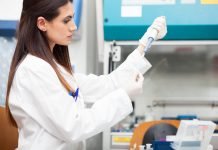
Photo: Sara Wagner Robb, left, and Chunla He conduct their research on the University of Georgia’s Health Sciences Campus. Their recent study involves breast cancer and circadian rhythms. Photo Courtesy: Paul Efland/University of Georgia.
Copyright ? 2014 Sunvalley Communication. All rights reserved. Republication or redistribution of Sunvalley Communication content, including by framing or similar means, is expressly prohibited without the prior written consent of Sunvalley Communication. Sunvalley Communication shall not be liable for any errors or delays in the content, or for any actions taken in reliance thereon. Onco’Zine and Oncozine are registered trademarks and trademarks of Sunvalley Communication around the world.