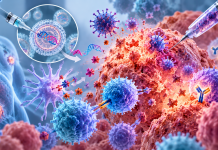
Emerging research is revealing a complex relationship between oral health, chronic inflammation, the oral microbiome, and cancer, particularly cancers of the mouth, head, and neck. Although scientists have not established that periodontal disease causes cancer, understanding these biological connections highlights the importance of maintaining oral health and recognizing potentially concerning changes early.
Key Takeaways
- Periodontal disease and oral cancer are associated. Research has identified a relationship between chronic gum disease and oral squamous cell carcinoma, although causation has not been established.
- The oral microbiome may provide important biological insights. Studies have identified differences in microbial communities among patients with head and neck cancers, but the role of these changes in cancer development remains uncertain.
- Chronic inflammation warrants further investigation. Persistent inflammation associated with periodontal disease may influence cancer-related biological pathways, although the mechanisms are not fully understood.
- Good oral hygiene remains essential for overall health. Brushing with fluoride toothpaste, cleaning between teeth, treating gum disease, and getting regular dental exams help protect oral tissues and support early detection of suspicious abnormalities.
- Prevention and early detection are complementary. Avoiding tobacco, limiting alcohol, following appropriate HPV vaccination recommendations, and seeking professional evaluation of persistent oral lesions can help address established cancer risk factors and support timely assessment.
Emerging research reveals important connections between oral health, chronic inflammation, the microbiome, and cancer. Most people associate dental hygiene with preventing cavities, bad breath, and tooth loss. Yet our mouths are much more than a collection of teeth and gums. They are complex biological environments containing hundreds of microbial species, immune defenses, and living tissues
that interact with the rest of the body.
Scientists are increasingly investigating whether chronic gum inflammation, periodontal disease, and changes in the oral microbiome may be associated with certain cancers, particularly those affecting the mouth, head, and
neck.
What the Research Reveals
Periodontal disease is a chronic inflammatory condition that damages the gums and the structures that support the teeth. As it progresses, bacterial communities change, inflammation persists, and surrounding tissues can deteriorate. A 2023 systematic review and meta-analysis published in
the British Journal of Oral and Maxillofacial Surgery examined 13 studies and identified an association between periodontal disease and oral squamous cell carcinoma (Li et al., 2023). However, the research did not establish that periodontal disease causes cancer or that treating it prevents cancer.
Shared factors such as tobacco use and alcohol consumption may influence both conditions. This distinction is important: an association is not proof of causation.
Inflammation and the Oral Microbiome
Inflammation is essential for healing and immune protection, but persistent inflammation can damage healthy tissues. Researchers are investigating whether inflammatory activity associated with periodontal disease may also influence biological pathways involved in cancer development. Another emerging area of research concerns the oral microbiome—the community of microorganisms naturally inhabiting our mouths.
A 2025 systematic review published in Oral Oncology identified differences in the oral microbial communities of patients with head and neck cancers, including increased populations of certain periodontal-associated bacteria and reduced levels of some normally occurring microorganisms (Le Guévelou et al., 2025). Whether these microbial changes contribute to cancer, result from the disease, or reflect other underlying factors remains uncertain. These discoveries reinforce an important biological principle: good oral health is not about eliminating microorganisms, but maintaining an environment where healthy tissues and balanced microbial communities can thrive.
Prevention Begins With Awareness
Although researchers have not established that dental hygiene directly prevents cancer, its benefits for oral health are undeniable. Brushing twice daily with fluoride toothpaste, cleaning between teeth, treating gum disease, and receiving regular professional dental care help protect oral tissues. Dental examinations also help identify suspicious abnormalities before they progress unnoticed. The American Dental Association’s updated 2026 guidance emphasizes clinical examinations and timely evaluation of suspicious oral lesions. Persistent sores, unusual lumps, unexplained bleeding, or difficulty swallowing warrant professional attention. Mouth lesions that do not heal within approximately two weeks should be evaluated, while suspicious changes require prompt assessment. Avoiding tobacco, limiting alcohol, and following appropriate HPV vaccination recommendations address established risk factors for certain head and neck cancers (National Cancer Institute, n.d.).
The Bigger Picture
The emerging relationship between oral health, inflammation, microbial balance, and cancer reminds us that the human body functions as an interconnected biological system.
While science continues to investigate these relationships, one conclusion is already clear: maintaining healthy teeth and gums reduces preventable oral disease, and regular dental examinations create opportunities to recognize potentially serious conditions early. Good dental hygiene is far more than cosmetic maintenance. It is a fundamental part of protecting our health and supporting lifelong well-being.
References
[1] American Dental Association. Dental examinations crucial in early oral cancer detection, September 29m 2026. Online. Last accessed on October 30, 2026.
[2] Jennifer LG, Larnaudie A, Béné MC, Cocherie T, Perazzi M, El-Houat Y, Kammerer E, Bastit V, Pointreau Y. Relationships between oral microbiome and head and neck squamous cell carcinoma: a systematic review. Oral Oncol. 2025 Sep;168:107571. doi: 10.1016/j.oraloncology.2025.107571. Epub 2025 Aug 5. PMID: 40752139.
[3] Li R, Hou M, Yu L, Luo W, Liu R, Wang H. Association between periodontal disease and oral squamous cell carcinoma: a systematic review and meta-analysis. Br J Oral Maxillofac Surg. 2023 Jul;61(6):394-402. doi: 10.1016/j.bjoms.2023.05.004. Epub 2023 May 16. PMID: 37308334.
[4] National Cancer Institute. (n.d.). Head and neck cancers. Online. Last accessed on October 30, 2026
Featured image: © 2017 – 2026 Fotolia | Dental Health and Oral Microbiology Montage. Used with permission
DOI: 10.14229/onco.2026.30.10.004