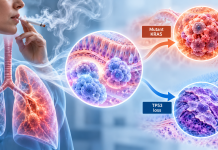
Macrophages—immune cells involved in inflammatory reactions and tumor processes wich use glucose and other nutrients to fuel their metabolism—can adapt their metabolism to a low-nutrient environment with astonishing flexibility. However, the mechanism in which macrophages adopt to a limited or reduced glucose supply, present in the tumor microenvironment, are poorly understood.
No, for the first time, an international research team led by Katharina Leithner, MD. PhD of the Otto Loewi Research Center and first author Katharina Schindlmaier PhD, was able to prove that macrophages also remain active despite glucose deficiency by reversing parts of the insulin pathway. The outcome of their study, supported by the Austrian Science Fund (FWF) and the professional organization EMBO, was published in journal PNAS (Proceedings of the National Academy of Sciences).[1]
Metabolic flexibility
Macrophages are white blood cells that play an important role in the immune system. They detect, engulf and destroy pathogens and damaged cells. In the body, they fulfill a variety of functions including the elimination of infection and the regulation of inflammatory response.
They also promote tumor growth by suppressing other immune cells. The microenvironment of tumors, for example lung tumors, is frequently deficient in certain nutrients like glucose. This represents a great challenge for macrophage metabolism. Using stable isotope labeling and metabolic analysis, the Med Uni Graz research team along with its cooperation partners in Austria and Spain demonstrated that macrophages activate certain steps in the gluconeogenesis pathway in response to glucose deficiency.
The research group also established proof that this metabolic pathway, which normally serves to create glucose in the liver, was present in lung cancer cells as well. This adaptation was mediated by the enzyme phosphoenolpyruvate carboxykinase 2 (PCK2). At the same time, the cells increased their use of glutamine as an alternative source of carbon and fuel. “This finding takes our research to a new level. It shows how adaptable the immune system is—even under circumstances in which hardly any glucose is available,” explains first author Katharina Schindlmaier of the Division of Pharmacology.
Focus on immune cell behavio
In addition, the research team discovered that rthis alternative metabolic program is activated in macrophages from lung tissue and lung cancer specimens. The study shows that immune cells in the tumor environment possess high metabolic adaptability—an important factor for their behavior in inflammation and cancer.
“Our findings clearly indicate that macrophages do not have to rely on glucose alone but have many different pathways for ensuring their supply,” Leithner noted.
“This improves our understanding of how immune cells function in the tumor environment and might open up new therapeutic approaches in the long term,” she added.
The researcher found that the main functions of macrophages remained uninfluenced by glucose deficiency, yet certain molecules that regulate macrophages for other immune cells were significantly changed by depriving them of glucose. The research group continues to investigate the significance of these adaptations.
Potential for new therapies
A better understanding of these adaptive mechanisms may help develop targeted strategies for influencing the immune system during cancer treatment. If the targeted modulation of macrophage metabolism is successful, their proinflammatory or anti-inflammatory activity may be therapeutically regulated—for example, to improve the effectiveness of immunotherapies.
The new findings broaden the understanding of how immune cells adapt their metabolism to challenging conditions and might be an important piece of the puzzle of how to improve immunotherapy.
“When we understand how different types of cells behave in the tumor environment, we may be able to learn how to influence this environment directly—to create conditions favorable for the patient and unfavorable for the tumor,” Schindlmaier concluded.
Reference
[1] Schindlmaier K, Haitzmann T, Bubalo V, Konrad B, Jelwan J, Bluemel G, Rittchen S, Jäger V, Dengler MA, Brcic L, Lindenmann J, Marsh LM, Eichmann TO, Kirchmair A, Trajanoski Z, Kargl J, Muñoz-Pinedo C, Leithner K. Metabolic adaptation of glucose-deprived macrophages involves partial gluconeogenesis. Proc Natl Acad Sci U S A. 2025 Nov 4;122(44):e2419568122. doi: 10.1073/pnas.2419568122. Epub 2025 Oct 29. PMID: 41160607.
Featured image: Katharina Schindlmaier and Katharina Leithner, Med Uni Graz. Photo courtesy © 2025 Med Uni Graz. Used with permission.
DOI