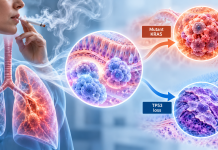
A researcher at the University of Houston College of Pharmacy has joined a $3.2 million effort to develop a promising new treatment for triple-negative breast cancer (TNBC), one of the most aggressive and difficult-to-treat forms of the disease, accounting for 10-15% of all breast cancer cases.
According to the American Cancer Society (ACS), TNBC tends to be more common in women younger than age 40, who are Black, or who have a BRCA1 mutation.[1]
Wei Wang, a University of Houston research associate professor, is part of a team led by Wei Li, director of the University of Tennessee Health Science Center College of Pharmacy’s Drug Discovery Center.
The team is developing a new kind of drug designed to attack murine double minute 2 or MDM2, a cancer-driving protein often found at high levels in triple-negative breast cancer (TNBC). Overexpression/amplification of MDM2 has been linked to disease progression and tumor growth, treatment resistance, and poor patient outcomes.[2]
Research has shown that alterations in MDM2 expression occur in multiple types of cancer, leading to uncontrolled proliferation. MDM2 modulates cellular processes through transcription, post-translational modifications, protein degradation, cofactor binding, and subcellular localization.[3]
Although MDM2 was discovered over 35 years ago and is considered an attractive target for cancer therapy, and many MDM2 inhibitors and degraders have been evaluated in clinical trials, there is yet no Food and Drug Administration (FDA)-approved MDM2 inhibitor on the market.[2]
Agressive cancer
In the world of breast cancer, the kind termed ‘triple-negative’ dangerously lives up to its name – it grows aggressively, is more likely to have spread by the time it’s discovered, and will commonly return after treatment. Still, the term triple-negative refers to tumors that test negative for estrogen receptor (ER) and progesterone receptor (PR) and have high levels of the Human Epidermal Growth Factor Receptor 2 (HER2) protein.
Because TNBC lacks specific targets, it is mostly managed by general chemotherapy.
“The existing chemotherapeutic drugs often have significant side effects and/or develop acquired drug resistance,” explained Wang, who has received $1.7 million to support the work of the team in fighting MDM2.
Researchers on Li’s team have discovered a compound that directly breaks down MDM2, stopping it at the source. In early laboratory models, this new compound has already shown the ability to shrink tumors, offering hope for a more effective treatment.
“This work could lead to an entirely new class of therapies for triple-negative breast cancer,” Li said.
“We’re hopeful that by directly removing the MDM2 protein from cancer cells, we can help more patients respond to treatment regardless of their tumor type,” Li added.
The chemistry and drug design work is being led by the team at the University of Tennessee Health Science Center. At UH, Wang is joined by Ruiwen Zhang, professor of pharmacology and toxicology, and will focus on understanding how the treatment works and evaluating its effectiveness in models that closely mirror human disease.
“We will study how the drug targets MDM2 and evaluate the most promising drug candidates to determine effective dosing, understand how the drug behaves in the body, compare it with existing treatments, and assess early safety,” Wang said.
“Together, these studies are designed to help move this potential therapy closer to clinical development for patients who urgently need better options,” Wang concluded.
Reference
[1] Triple-negative Breast Cancer. American Cancer Society. Online. Last accessed on February 18, 2026.
[2] Wang W, Albadari N, Du Y, Fowler JF, Sang HT, Xian W, McKeon F, Li W, Zhou J, Zhang R. MDM2 Inhibitors for Cancer Therapy: The Past, Present, and Future. Pharmacol Rev. 2024 May 2;76(3):414-453. doi: 10.1124/pharmrev.123.001026. PMID: 38697854; PMCID: PMC11068841.
[3] Zafar A, Khan MJ, Naeem A. MDM2- an indispensable player in tumorigenesis. Mol Biol Rep. 2023 Aug;50(8):6871-6883. doi: 10.1007/s11033-023-08512-3. Epub 2023 Jun 14. PMID: 37314603; PMCID: PMC10374471.
Feature image: Wei Wang, UH research associate professor, is part of a team developing a new drug to fight triple-negative breast cancer. Photo courtesy: © 2026 University of Houston. Used with permission.
DOI