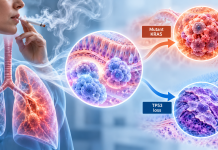
Scientists have identified two unlikely partners in a type of immune cell called a macrophage that work together in response to cancer drugs. These two partners are working together to increase inflammation in a way that may alter tumor growth. Researchers from the National Institutes of Health published the study in the April 15, 2014 edition of the journal Cancer Research.
These two unique partners are the p53 protein that suppresses tumors and the nuclear factor-kappaB or NF-kappaB protein that stimulates their growth. Blocking this partnership could help prevent inflammation from occurring in cancer patients undergoing chemotherapy.
Modifying this pathway through inhibitors of p53 activation could decrease the inflammatory response, both in cancer treatment and in lung diseases
Inflammatory-based side effects
“Since many chemotherapy drugs target p53 to fight cancer cells, our finding helps us better understand the inflammatory-based side effects often seen in patients undergoing chemotherapy, as well as roles for inflammation within tumors,” said Julie Lowe, Ph.D., lead author on the paper and fellow in the Laboratory of Respiratory Biology at the National Institute of Environmental Health Sciences (NIEHS), part of NIH.
Both p53 and NF-kappaB have been studied in modern cancer research. But, until now, they have generally been viewed as having opposite effects on growth. This study is among the first to show a cooperative interaction between p53 and NF-kappaB in human immune cells, and to reveal unexpected roles of p53 in tumor-related macrophages.
Major pathways
The study described a new collaboration between two major pathways to generate inflammation, said Michael Resnick, Ph.D., senior author and head of the NIEHS Chromosome Stability Group.
Inflammatory responses to exposures of p53-activating chemotherapeutic drugs were measured in immune cells from the blood and lungs of healthy volunteers at the NIEHS Clinical Research Unit. The researchers found that these drugs enhanced the expression of molecules that direct inflammation, an effect that required both p53 and NF-kappaB. The study also characterized a role for p53 in immune cells associated with tumors.
Current therapies
Currently, most cancer therapies related to the p53 tumor suppression process are directed at activating the p53 protein. However, this study has clinical applications not only for cancer, but also for smoking-related lung disease. In both cases, p53 is activated in immune cells through chemotherapy, radiation, or smoking. Modifying this pathway through inhibitors of p53 activation could decrease the inflammatory response, both in cancer treatment and in lung diseases, such as chronic obstructive pulmonary disease.
For more information:
[1] Lowe JM, Menendez D, Bushel PR, Shatz M, Kirk EL, Troester MA, Garantziotis S, Fessler MB, Resnick MA. p53 and NF-kappaB co-regulate pro-inflammatory gene responses in human macrophages. Cancer Res; 2014 74(8):2182-2192.[Article]
Copyright ? 2014 InPress Media Group/Sunvalley Communication. All rights reserved. Republication or redistribution of InPress Media Group/Sunvalley Communication content, including by framing or similar means, is expressly prohibited without the prior written consent ofInPress Media Group/Sunvalley Communication. InPress Media Group/Sunvalley Communication shall not be liable for any errors or delays in the content, or for any actions taken in reliance thereon. Onco’Zine and Oncozine are registered trademarks and trademarks of Sunvalley Communication around the world.