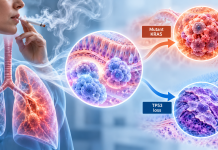
While many researchers and scientists are investigating avenues designed to prevent the onset of a cancer defense mechanism known as autophagy, researchers at Virginia Commonwealth University Massey Cancer Center are leveraging it in a new therapy that causes the process to culminate in cell death rather than survival. Scientists have found that in selective autophagy, the adaptor protein SQSTM1/p62 plays a critical role in recognizing/loading cargo (e.g., malfolded proteins) into autophagosomes for lysosomal degradation. [1]
In short, this novel treatment strategy translates in the targeting of the p62 protein, which is often referred to as the “Trash Man” due to its role in disposing unwanted cellular proteins during autophagy. Results from preclinical experiments suggest this experimental treatment approach could be particularly effective against multiple myeloma and potentially other forms of blood cancers.
Cancer therapies cause unwanted proteins to accumulate in cancer cells, which can trigger a form of cell suicide known as apoptosis. To survive, the cells break down the excess proteins through autophagy, from a Greek term meaning self eating. In a study recently published in the July issue of the journal Molecular and Cellular Biology, scientists induced autophagy using the anti-tumor drug obatoclax while simultaneously blocking the production of p62 using a drug known as a cyclin-dependant kinase (CDK) inhibitor. Several experiments involving animal models and cultured multiple myeloma cells demonstrated that blocking p62 disrupted autophagy and killed far more cancer cells than administering the anti-cancer agents alone.
Our strategy turns autophagy from a protective process into a toxic one, and these results suggest it could increase the effectiveness of a variety of cancer therapies that induce autophagy…
Exploiting lethal effects
“Therapies that are designed to block the early stages of autophagy do not offer the possibility of exploiting its potentially lethal effects,” explained Steven Grant, M.D., Shirley Carter Olsson and Sture Gordon Olsson Chair in Cancer Research, associate director for translational research and program co-leader of Developmental Therapeutics at VCU Massey Cancer Center. “Our strategy turns autophagy from a protective process into a toxic one, and these results suggest it could increase the effectiveness of a variety of cancer therapies that induce autophagy.”
Degradation chambers
Critical to the success of this therapy is Bik, a protein that plays a significant role in governing cell death and survival. During cancer treatments, Bik accumulates in cancer cells until it triggers apoptosis. Normally, the cancer cells would induce autophagy and p62 would rid the cells of Bik by loading the proteins into degradation chambers known as auotophagosomes for disposal. However, blocking p62 production results in an inefficient form of autophagy and the accumulation of Bik eventually causes the cancer cells to undergo apoptosis.
This research builds upon more than a decade of work by members of Grant’s laboratory investigating novel treatment strategies and combination therapies that selectively kill multiple myeloma and other blood cancer cells. The technology in his study has been made available for licensing through the VCU Office of Research.
“We are now working to identify additional CDK inhibitors that can be used to disrupt autophagy,” says Grant. “The ultimate goal will be to translate these findings into a clinical trial to test the therapy in patients with various blood cancers.”
For more information:
Chen S, Zhou L, Zhang Y, Leng Y, Pei XY, Lin H, Jones R. Targeting SQSTM1/p62 Induces Cargo Loading Failure and Converts Autophagy to Apoptosis via NBK/Bik. Mol Cell Biol. 2014 Sep 15;34(18):3435-49. doi: 10.1128/MCB.01383-13. Epub 2014 Jul 7. [Article][PubMed]
Copyright ? 2014 Sunvalley Communication. All rights reserved. Republication or redistribution of Sunvalley Communication content, including by framing or similar means, is expressly prohibited without the prior written consent of Sunvalley Communication. Sunvalley Communication shall not be liable for any errors or delays in the content, or for any actions taken in reliance thereon. Onco’Zine and Oncozine are registered trademarks and trademarks of Sunvalley Communication around the world.