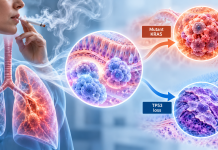
The U.S. Food and Drug Administration (FDA), on August 26, 2026, approved daraxonrasib, marketed as Rasonque®, an oral RAS(ON) inhibitor developed by Revolution Medicines. The approval covers adults with metastatic pancreatic ductal adenocarcinoma (PDAC) who have received at least one prior systemic therapy, or who are not candidates for multiagent chemotherapy. [1] It is the first targeted medicine approved to directly inhibit RAS, the gene most responsible for driving pancreatic cancer, and the first RAS(ON) multi-selective inhibitor to reach patients. [1][2]
For a disease that has changed little in its standard-of-care options for years, the approval is being described by clinicians and analysts alike as a genuine shift rather than an incremental one.
A Disease That Has Outpaced Its Treatments
Pancreatic adenocarcinoma remains one of the most lethal solid tumors in oncology. Roughly 55,000 people are diagnosed with PDAC in the United States each year, and more than 50,000 die from it under current standard-of-care treatment. [1][3] Because early symptoms are sparse or absent, about 80% of patients are diagnosed only after the cancer has already spread, when treatment options narrow considerably [1]. For those diagnosed at the metastatic stage, five-year relative survival sits at approximately 3%. [1][4]
The disease’s underlying biology explains much of this difficulty. Mutations in the RAS gene family drive the overwhelming majority of pancreatic cancers, disrupting normal growth-control signaling and setting off relentless tumor proliferation. [1][3] RAS has been recognized as the central driver of PDAC for decades, yet it also earned a reputation as one of the most difficult targets in cancer drug development. For years, RAS proteins were considered effectively “undruggable,” and physicians treating pancreatic cancer have relied largely on cytotoxic chemotherapy administered intravenously, regimens that are difficult to tolerate and only modestly effective against a tumor already positioned to outrun them.
How Daraxonrasib Works
Daraxonrasib takes a different approach than earlier attempts at RAS inhibition. Rather than waiting to catch RAS in its inactive, “off” state, as earlier-generation inhibitors did, daraxonrasib is designed to inhibit RAS while it is actively signaling for growth, an approach the company refers to as RAS(ON) inhibition [5].
Mechanistically, the drug functions as a molecular glue. It binds noncovalently to a chaperone protein called cyclophilin A (CypA) and to active, GTP-bound RAS proteins, forming a tricomplex that sterically blocks RAS from engaging the downstream effectors it needs to maintain growth signaling [5]. Because this tri-complex mechanism does not depend on a single mutant RAS variant, daraxonrasib is described as multi-selective, capable of inhibiting wild-type RAS as well as a broad range of mutant forms, including G12D, G12V, and G12R, that together account for the majority of RAS-driven pancreatic tumors [1,5]. That breadth matters clinically: the FDA approval does not require a companion diagnostic test, and covers patients with or without an identified tumor RAS mutation [1]. Blocking wild-type RAS reactivation is also thought to be important for the durability of the response, since tumors have been observed to rely on wild-type RAS signaling as an escape route once a mutant-selective inhibitor is introduced [5].
What the Pivotal Trial Showed
The approval rests on RASolute 302, a global, randomized Phase 3 trial that compared once-daily oral daraxonrasib against investigator’s choice of one of four standard cytotoxic chemotherapy regimens in patients with previously treated metastatic PDAC. [1][6] The trial enrolled patients across the full range of RAS status seen in pancreatic cancer, including G12 mutation carriers and patients with no identified tumor RAS mutation, and it was designed with dual primary endpoints: progression-free survival and overall survival in the RAS G12 mutant population, with survival and response endpoints also assessed across the full intent-to-treat population. [1,6]
Results were presented at the 2026 American Society of Clinical Oncology (ASCO) Annual Meeting and published simultaneously in The New England Journal of Medicine (NEJM).[1][6] In the intent-to-treat population, daraxonrasib reduced the risk of death by 60% relative to chemotherapy, with a hazard ratio of 0.40. Median overall survival reached 13.2 months with daraxonrasib compared with 6.7 months with chemotherapy, roughly doubling the survival benefit patients could previously expect in this setting [1]. Progression-free survival nearly doubled as well, with a median of 7.2 months on daraxonrasib versus 3.6 months on chemotherapy [1]. Outcomes in the RAS G12 mutant subgroup were consistent with the broader population.
The trial also captured how patients felt during treatment, not only how long they lived. Using time-to-deterioration measures for global health status and pain, daraxonrasib delayed meaningful decline in quality of life: a median of 5.7 months before global health status worsened, compared with 2.6 months on chemotherapy, and a median of 9.2 months before clinically relevant pain worsened, compared with 3.8 months on chemotherapy [1]. For a disease with a notably high symptom burden, that distinction- living longer while also maintaining a better day-to-day health-related Quality of Life (hrQoL) – is one oncologists treating PDAC have been waiting on for some time.
Tolerability and What to Watch For
Daraxonrasib’s safety profile differs meaningfully from that of chemotherapy, though it is not without its own monitoring demands. The most common adverse reactions, occurring in 20% or more of patients, were rash, diarrhea, stomatitis, nausea, vomiting, abdominal pain, edema, decreased appetite, and hemorrhage [1]. Dermatologic and soft-tissue toxicity was the most frequent concern, affecting 86% of treated patients, with 10% experiencing Grade 3 events; prophylactic measures, including topical corticosteroids, emollients, sunscreen, and, in some cases, oral antibiotics, are recommended before starting therapy to reduce this risk [1]. Stomatitis occurred in 57% of patients and diarrhea in 63%, both generally manageable with topical treatment, antidiarrheal medication, and dose adjustment as needed [1].
More serious, though less common, risks include gastrointestinal perforation, seen in fewer than 1% of patients, and interstitial lung disease or pneumonitis, occurring in about 2.4% of patients [1]. Both warrant prompt evaluation if suspected, with dosing held or discontinued depending on severity and the exclusion of other causes. Serious adverse reactions overall occurred in 30% of patients, and 2.9% discontinued treatment permanently due to adverse events [1]. Set against the toxicity profile of multiagent intravenous chemotherapy in this setting, the balance struck by an oral, once-daily regimen with a generally manageable side-effect profile is part of what makes daraxonrasib attractive as a practical alternative, not only an effective one.
An Analyst’s View: A Changed Standard of Care
Healthcare intelligence firm GlobalData has characterized the approval as one that changes the standard of care in second-line pancreatic cancer outright, on the reasoning that an oral therapy with this survival benefit is likely to displace the intensive, logistically complicated chemotherapy regimens that have defined this treatment line [7]. The firm points to daraxonrasib’s mechanism, its ability to inhibit RAS in its active state using the CypA chaperone, as the basis for covering more than 90% of pancreatic cancer patients regardless of specific RAS mutation status, while also addressing the wild-type RAS reactivation that tumors can use to develop resistance over time [7].
Beyond Second Line: A Broader Pipeline in Motion
Revolution Medicines has been explicit that daraxonrasib’s initial approval is a starting point, not an endpoint, for the program. The company is pursuing daraxonrasib across earlier lines of pancreatic cancer treatment and into other RAS-driven tumor types. [1][7]
The Phase 3 RASolute 303 trial, evaluating daraxonrasib alone or in combination with gemcitabine plus paclitaxel chemotherapy in the first-line metastatic PDAC setting, has recently begun enrolling patients, following earlier data showing a high response rate with daraxonrasib in previously untreated patients [7]. Revolution Medicines also plans to initiate RASolute 304, testing daraxonrasib as adjuvant monotherapy following surgical resection, and RASolute 309, which would pair daraxonrasib with the company’s other RAS(ON) inhibitor, the G12D-selective agent zoldonrasib, in first-line metastatic disease, with the explicit goal of building a fully chemotherapy-free regimen for newly diagnosed patients. [7]
The RAS(ON) platform’s reach extends past pancreatic cancer as well. Daraxonrasib is being advanced through a global Phase 3 registrational program that includes metastatic RAS-mutant non-small cell lung cancer, alongside a planned study combining daraxonrasib with pembrolizumab and chemotherapy in that setting [1,7]. A Phase 2 basket study is also planned to explore daraxonrasib’s activity across additional RAS-mutant tumor types [7]. The drug’s development has been supported along the way by Breakthrough Therapy and Orphan Drug designations from the FDA, inclusion in the FDA’s Project Orbis initiative for concurrent international review, and a phased review already underway at the European Medicines Agency, where daraxonrasib holds orphan medicinal product status and high-priority designation under the EMA’s Cancer Medicines Pathfinder project [1].
What This Means for Patients Now
Daraxonrasib, dosed at 300 mg once daily as an oral tablet, is now available in the United States by prescription [1]. Revolution Medicines has launched a patient support program called (ON)Path, intended to help patients navigate insurance coverage, financial assistance, and treatment education as they start therapy [1]. Because dermatologic and gastrointestinal side effects are common enough to require active management from the outset, oncology teams adopting daraxonrasib into practice will need to build in the same kind of proactive counseling and prophylaxis that has become standard with other targeted oral oncology agents.
For a cancer where meaningful therapeutic advances have been rare, and where patients and families have too often measured progress in months rather than years, an oral RAS-targeted therapy that roughly doubles median survival while helping preserve quality of life during treatment represents a genuine change in what a pancreatic cancer diagnosis can mean. Whether daraxonrasib’s role expands into earlier lines of treatment, as Revolution Medicines’ pipeline strategy anticipates, will depend on the results still to come. What has already changed, as of this approval, is the first-line option a physician now has to offer a patient facing this disease after their first round of chemotherapy has stopped working.
Clinical Trials
- RASolute 302 (NCT06625320) — Phase 3, randomized trial of daraxonrasib versus investigator’s choice of chemotherapy in previously treated metastatic PDAC; basis for FDA approval [1][6].
- RASolute 303 (NCT07491445) — Phase 3 trial of daraxonrasib, alone or combined with gemcitabine plus paclitaxel, in first-line metastatic PDAC; currently enrolling [7].
- RASolute 304 (NCT07252232) — Planned Phase 3 trial of daraxonrasib monotherapy in the adjuvant pancreatic cancer setting [7].
- RASolute 309 — A planned Phase 3 trial combining daraxonrasib with zoldonrasib in first-line metastatic PDAC, evaluating a chemotherapy-free regimen [7].
- Global Phase 3 registrational program in RAS-mutant metastatic non-small cell lung cancer, with a planned study of daraxonrasib combined with pembrolizumab and chemotherapy [1][7].
- Planned Phase 2 basket study evaluating daraxonrasib across additional RAS-mutant tumor types [7].
Highlights of Prescribing Information
Daraxonrasib (Rasonque®; Revolution Medicines) [Prescribing Information] is indicated for adult patients with metastatic pancreatic adenocarcinoma who have received at least one prior systemic therapy or are not candidates for multiagent systemic therapy [1]. Warnings and Precautions include dermatologic and soft tissue toxicity, stomatitis and oral disorders, diarrhea, gastrointestinal perforation, interstitial lung disease/pneumonitis, and embryo-fetal toxicity [1]. Prophylactic measures, including topical corticosteroids, emollients, sun protection, and consideration of prophylactic oral antibiotics, are recommended starting with the first dose [1]. The most common adverse reactions (≥20%) are rash, diarrhea, stomatitis, nausea, fatigue, vomiting, abdominal pain, edema, decreased appetite, and hemorrhage [1]. Dosage adjustments are required for concomitant use with strong or moderate CYP3A inhibitors or inducers, P-gp inhibitors, and P-gp substrates; cyclosporine A should be avoided [1]. Females and males with reproductive potential should use effective contraception during treatment and for one week after the final dose [1]. This is not a complete summary of safety information; full Prescribing Information is available from Revolution Medicines, Inc.
References
[1] Revolution Medicines, Inc. U.S. FDA Approves Revolution Medicines’ RASONQUE™ (daraxonrasib), the First Broad RAS-Targeted Medicine in Metastatic Pancreatic Cancer. Press release. Redwood City, CA; August 26, 2026.
[2] RASONQUE (daraxonrasib) Prescribing Information. Redwood City, CA: Revolution Medicines, Inc.; August 2026.
[3] Siegel RL, Giaquinto AN, Jemal A. Cancer statistics, 2024. CA Cancer J Clin. 2024;74(1):12-49. doi:10.3322/caac.21820
[4] American Cancer Society. Survival Rates for Pancreatic Cancer. Accessed August 2026.
[5] Halbrook CJ, Lyssiotis CA, Pasca di Magliano M, Maitra A. Pancreatic cancer: Advances and challenges. Cell. 2023;186(8):1729-1754. doi:10.1016/j.cell.2023.02.014
[6] RASolute 302 Phase 3 trial results, presented at the 2026 American Society of Clinical Oncology (ASCO) Annual Meeting, with simultaneous publication in The New England Journal of Medicine. ClinicalTrials.gov identifier NCT06625320.
[7] GlobalData. Daraxonrasib approval changes standard of care in second-line pancreatic cancer, says GlobalData. Press release; August 2026.
Featured Image: Cancerous cells forming a lump in the pancreatic tissue. Photo courtesy: Scientific Animations. Licensed under the Creative Commons Attribution-Share Alike 4.0 International license.