A study supported by the Intramural Research Department of the American Cancer Society (ACS) shows that the adoption of Medicaid expansion in the the majority of states in United States appeared to improve both five-year cause-specific and overall survival in cancer patients.
The results of the study were published in Cancer Discovery, a journal of the American Association for Cancer Research (AACR).[1]
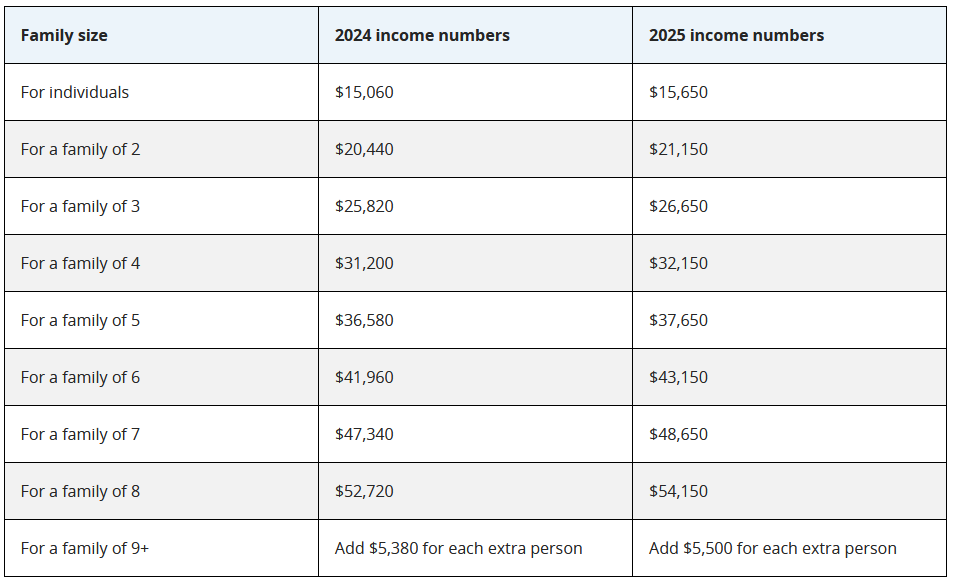
In 2014, a provision under the Patient Protection and Affordable Care Act (ACA) went into effect that allowed states to opt into expanding Medicaid eligibility to adults with incomes up to 138% of the federal poverty guidelines.*
Expanding Medicaid coverage allowed states to broadening the eligibility criteria (eg, raising the eligible income level).
Over the last decade, the expansion of Medicaid expansion increased insurance coverage in states that adopted the program and has been credited with a 30% reduction in the population of uninsured individuals. Such a significant change in the insurance profile, considered a historic public policy initiative, has had important implications for the more than 1.7 million patients diagnosed with cancer each year, as well as the care teams and policy makers. [2]
Insurance status has been linked to critical differences in cancer treatment and treatment outcomes. Existing studies have linked Medicaid expansion to increased insurance coverage, access to cancer screening services, and improved two-year survival rates, but its impact on longer-term survival among individuals diagnosed with cancer remains unknown, according to Elizabeth Schafer, MPH, an associate scientist at the American Cancer Society and the lead author of the study.
“Studying the impact of Medicaid expansion on longer-term survival outcomes among individuals diagnosed with cancer is important for guiding evidence-based decision-making by policymakers and advocates for maintaining and expanding Medicaid,” Schafer explained.
 Elizabeth Schafer, MPH, an associate scientist at the American Cancer Society (ACS): Medicaid expansion to increased insurance coverage, access to cancer screening services, and improved two-year survival rates. Photo courtesy © 2025 American Association for Cancer Research (AACR). Used with permission.
Study design
To answer their question, Schafer and her coauthors used a difference-in-differences (DD) study design that compared data from states during 2007-2008—a period prior to Medicaid expansion—with data from 2014-2015, when many states adopted the expansion.
This design allowed the research team to treat Medicaid expansion akin to an experimental intervention with effects that could be measured against a control group of states that had not enacted the expansion.
Using the Cancer in North America Survival dataset, Schafer and her coauthors analyzed data from 1,423,983 cancer cases diagnosed in adults aged 18 to 59 years and compared five-year survival from follow-up data obtained in the years following both the 2007-2008 cohort and the 2014-2015 cohort.
The analysis assessed and compared 26 expansion states with 12 states that did not expand Medicaid at that time.
In the context of Schafer’s study, results presented as percentage points (ppt) in difference-in-differences (DD) are the subtraction of the difference between expansion states and nonexpansion states in 2007-2008 from the difference between expansion and nonexpansion states in 2014-2015. DD of survival measurements shows whether Medicaid expansion correlates with the trajectory of survival rates relative to states where it was not adopted.
Rural America
After adjusting for covariates, the researchers observed that, among cancer patients living in rural areas, Medicaid expansion was associated with significant difference-in-differences (DD) improvements in cause-specific and overall survival of 2.55 ppt [DD: 2.55 percentage point (ppt); 95% confidence interval (CI), 0.23-4.86] and 3.03 ppt, respectively
Similarly, patients living in high-poverty areas in states with Medicaid expansion experienced significant DD improvements in cause-specific and overall survival: 1.54 ppt (DD: 1.54 ppt; 95% CI, 0.30-2.77) and 1.69 ppt respectively.
Patients with cancers associated with higher mortality also experienced significant improvements in both cause-specific and overall survival if they lived in Medicaid expansion states.
Overall survival
Overall survival among non-Hispanic Black individuals was also significantly higher in Medicaid expansion states, with a DD of 1.05 ppt.
Expansion was also associated with significant increases in both cause-specific and overall survival in non-Hispanic Whites as well, with DDs of 0.37 ppt (DD: 0.37 ppt; 95% CI, 0.05-0.70) and 0.57 ppt, respectively , and patients diagnosed with pancreatic cancer (DD: 2.60 ppt; 95% CI, 0.86-4.34), lung (DD: 1.32 ppt; 95% CI, 0.30-2.34), and colorectal cancer (DD: 1.31 ppt; 95% CI, 0.26-2.37).
Results were similar for OS. These findings underscore the importance of Medicaid expansion in mitigating disparities in survival outcomes.
In expansion states, an adjusted cause-specific survival improvement was observed for all cancer patients irrespective of individual variables, but the improvement was not statistically significant. Reflecting on the results, Schafer emphasized Medicaid expansion’s effectiveness as a public health policy.
“The evidence supporting Medicaid expansion in improving outcomes for individuals diagnosed with cancer is clear,” she explained.
Importance of Medicaid expansion
At the time of this writing, 40 out of 50 states and the District of Columbia have enacted the expansion, but 10—Alabama, Florida, Georgia, Kansas, Mississippi, South Carolina, Tennessee, Texas, Wisconsin, and Wyoming—have not.
“Research has shown that Medicaid expansion can increase cancer screening prevalence, early-stage diagnosis, short-term survival, and now—according to our own analysis—five-year survival. These findings underscore the importance of expanding Medicaid in the 10 remaining nonexpansion states and protecting expansion in the states that have already implemented it in order to improve outcomes for all individuals,” Schafer explained
Study limitations
Limitations of the study include the possible confounding factor of the ACA’s general broadening of health insurance coverage, as more people with health insurance and access to early cancer detection and treatment could skew the data.
Additionally, the dataset also excluded individuals with missing cause-of-death and sociodemographic information.
_
Note: * Federal Poverty Level differs between continental USA and Alaska and Hawaii.
Reference
[1] Schafer EJ, Johnson CJ, Moraes FY, Han X, Zhao J, Jemal A. Association between Medicaid Expansion and 5-Year Survival among Individuals Diagnosed with Cancer. Cancer Discov. 2025 Oct 8:OF1-OF6. doi: 10.1158/2159-8290.CD-25-1244. Epub ahead of print. PMID: 41058031.
[2] Ermer T, Walters SL, Canavan ME, Salazar MC, Li AX, Doonan M, Boffa DJ. Understanding the Implications of Medicaid Expansion for Cancer Care in the US: A Review. JAMA Oncol. 2022 Jan 1;8(1):139-148. doi: 10.1001/jamaoncol.2021.4323. PMID: 34762101.
Featured image courtesy © 2016 – 2025 Fotolia/Adobe. Used with permission
DOI